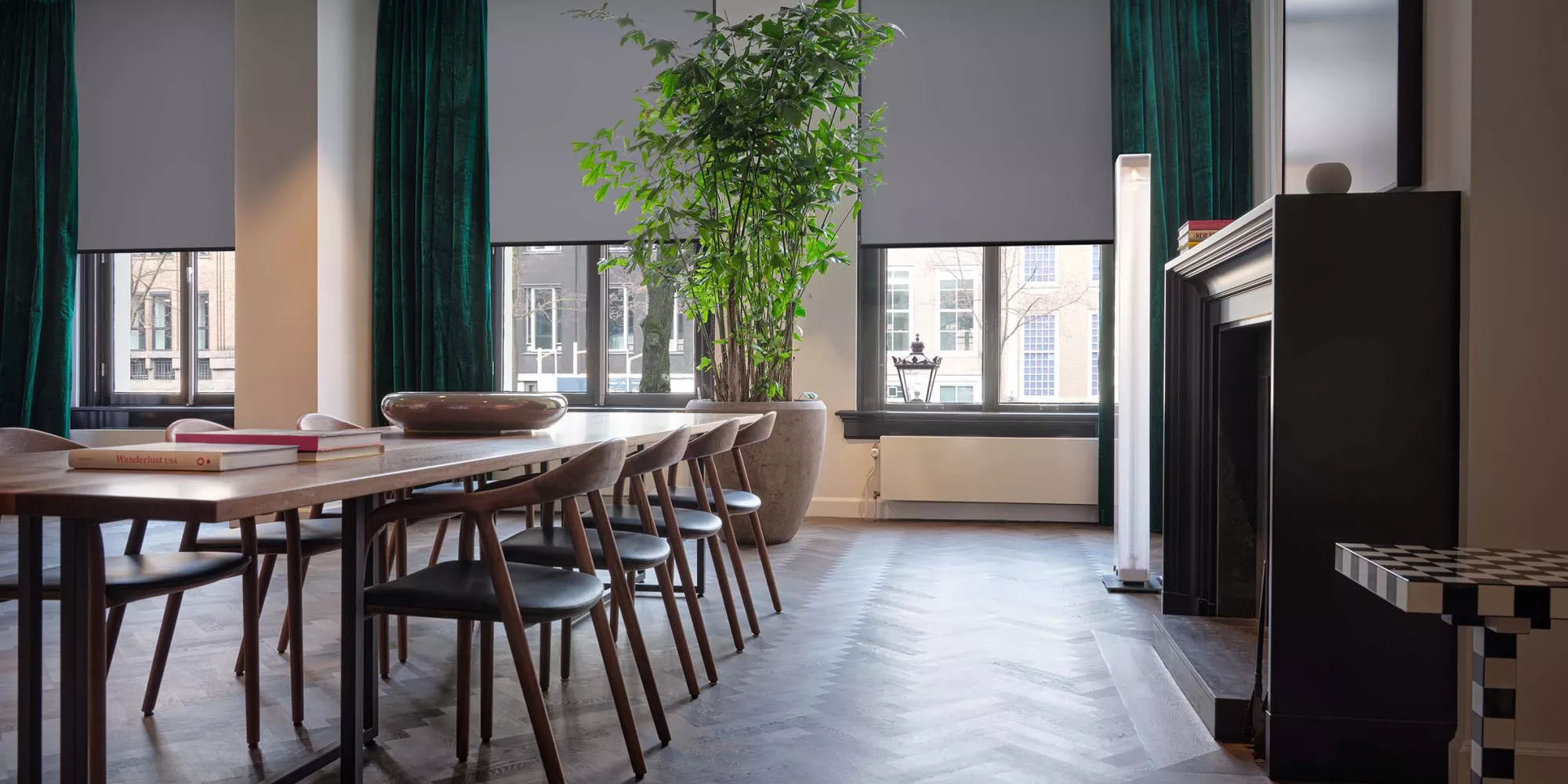
Find privacy blinds for ground-floor windows that let in daylight while keeping prying eyes out. Compare pleated, roller and Venetian blinds for your home.
For ground-floor windows, the most practical blinds are often those that cover the lower part of the window while leaving the top clear for daylight. Suitable pleated blind systems offer this flexibility, while Venetian blinds control views into the room by tilting their slats. Roller blinds are a good choice when you want to cover the entire pane evenly. The right choice depends mainly on the height of your windows, where passers-by can see in and whether you also need privacy in the evening with the lights on.
First, work out where people can see in
A window beside a pavement needs a different approach from one overlooking a quiet garden. Before choosing a blind, check what is actually visible from outside. The easiest way to do this is to have someone stay in the room while you look at the window from the usual route past the house. Also consider views from a neighbouring balcony or a garden on higher ground.
The height at which you use the room matters. In a dining room, you may mainly want to screen the table; in a living room, the seating area; while a bedroom may need more complete coverage. If passers-by can only see the lower part of the room, you do not necessarily need to cover the entire window for privacy.
- Check the view into the room when you are sitting and standing.
- Consider the distance from the pavement, road or neighbouring window.
- Assess which part of the glass needs to stay covered during the day.
- Think about whether you want to keep a view of the garden or sky.
- Repeat the same check in the evening with your usual indoor lighting.
Daytime privacy is not the same as evening privacy
A common mistake is choosing fabric based only on how it looks during the day. When it is brighter outside than inside, the interior may be less visible. In the evening, when you turn on the lights and it is dark outside, conditions change. A fabric that seemed opaque enough during the day may then reveal silhouettes or more details inside the room.
When choosing, distinguish between softening the light and screening the room from view. Sheer fabric can diffuse daylight beautifully, but it does not guarantee privacy on its own. Even a description stating that a fabric lets light through does not tell you enough about how much can be seen through it. For ground-floor windows, it is worth holding a sample up to the light and asking whether it is suitable for evening privacy.
Which privacy blinds work best for ground-floor windows?
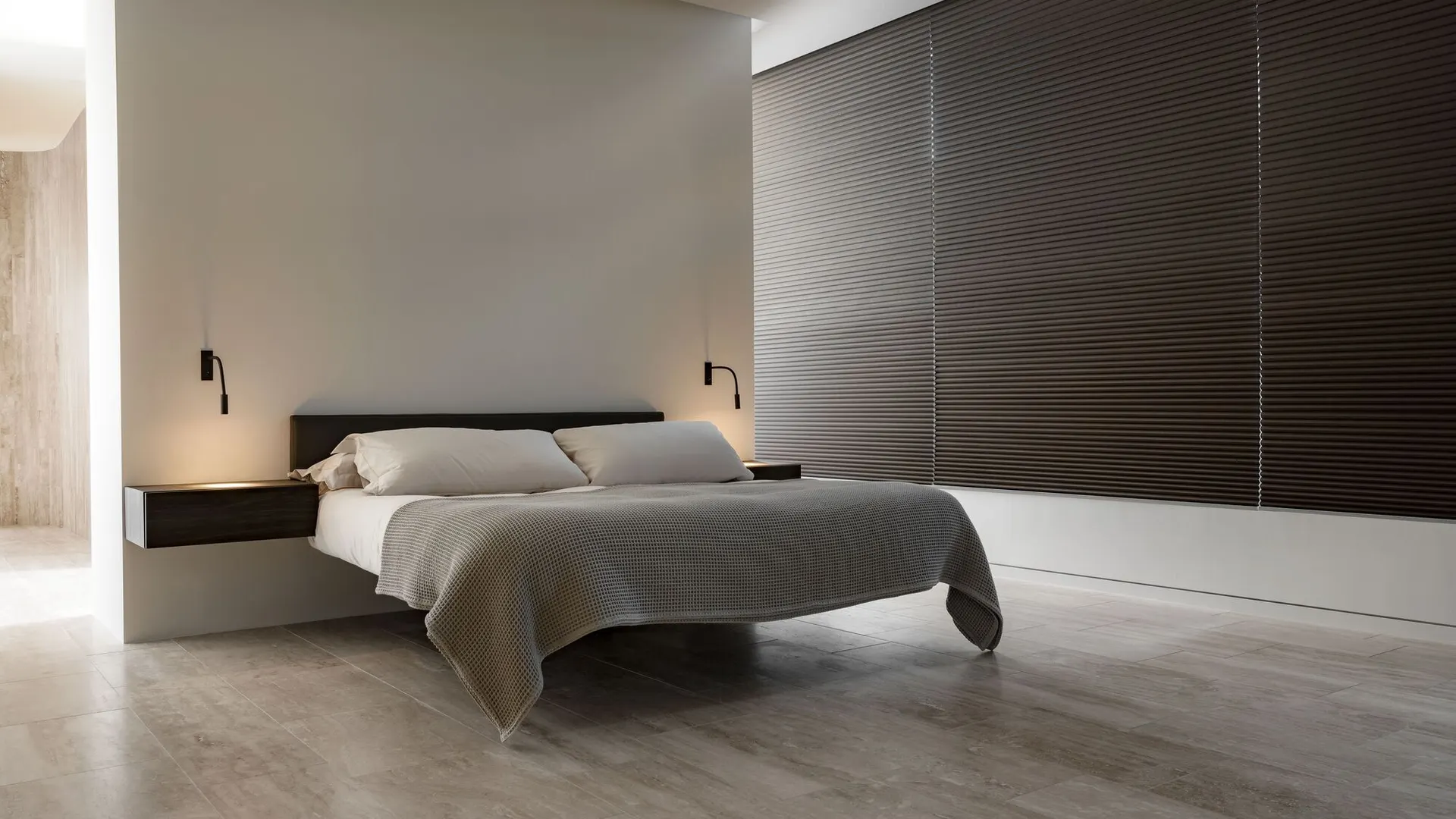
Pleated blinds for covering a specific part of the window
If you want to cover the lower part of the glass while leaving the top clear, pleated blinds are a sensible option. With top-down, bottom-up designs, you can adjust the position of the fabric to suit where you need privacy. This means you do not always have to cover the full height of the window.
This solution is particularly useful for windows beside footpaths and rooms where you want daylight to enter above the covered section. Before ordering, check that your chosen system offers the adjustment you need and is suitable for your window. Not all pleated blind designs operate in the same way.
Venetian blinds for controlling light and views
Venetian blinds let you make adjustments by tilting the slats. This is practical when the direction of the light changes or when you want to quickly adjust the balance between an open view and privacy during the day. Rather than raising the entire blind, you can simply change the angle of the slats.
Find the right angle by checking from outside, rather than relying only on how it looks from indoors. The view from the pavement is not the same as the view from an upper floor next door. If the slats are too open, they may leave a direct line of sight into the room, even though the blind appears to be lowered.
Roller blinds for uniform coverage
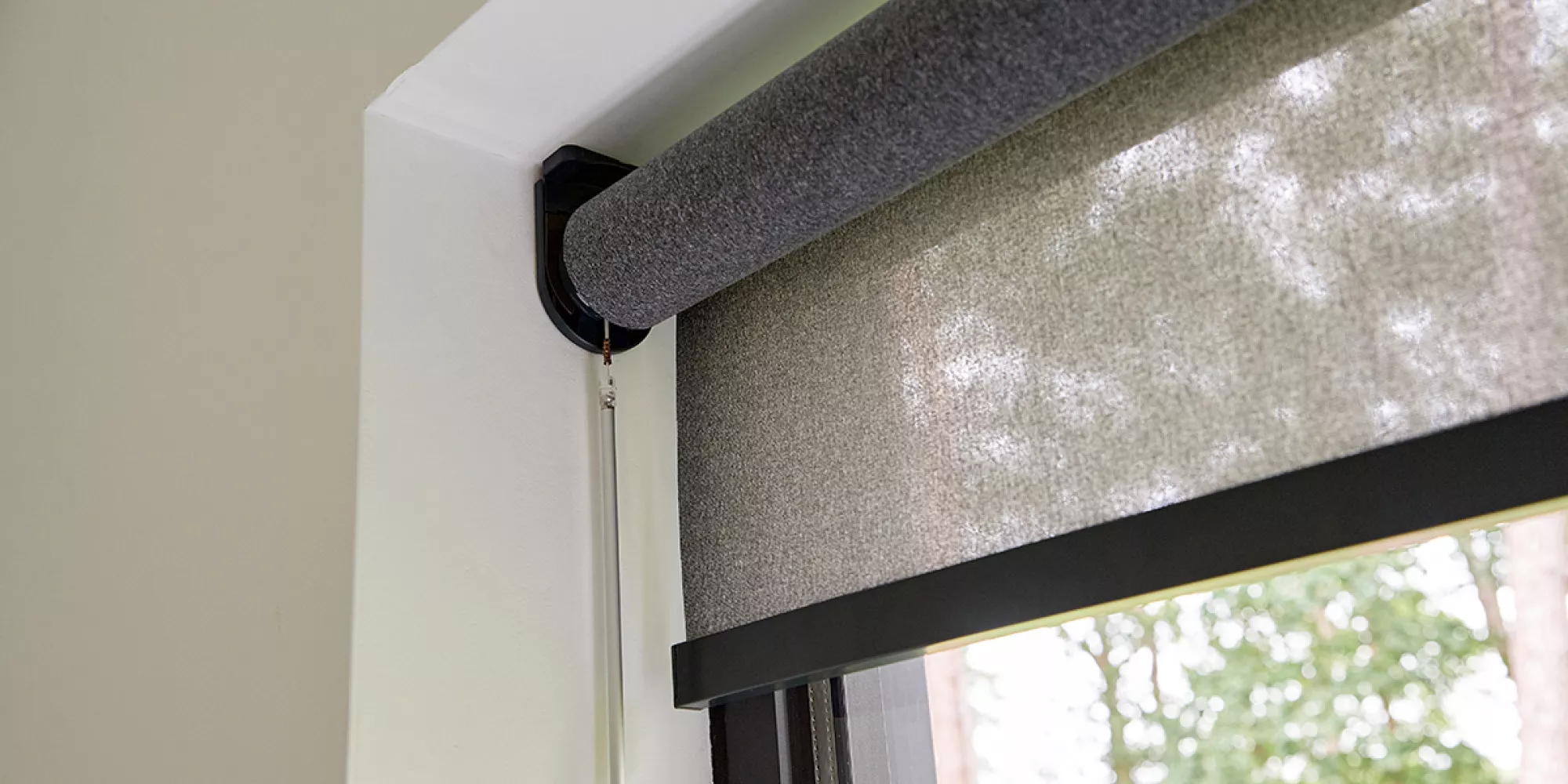
Roller blinds are suitable when you want a clean look and a simple way to cover the window. A standard roller blind lowers from the top, so covering the lower section also means covering the upper section. Bear this in mind if your main aim is to leave as much glass as possible uncovered above eye level.
Fabric choice plays an important role with roller blinds. For a room where you mainly need privacy in the evening, choose a material with suitable opacity. Also pay attention to the position of the blind in relation to the glass and any side gaps, which may allow a view of part of the interior from an angle.
How do you choose a fabric that will not make the room unnecessarily dark?
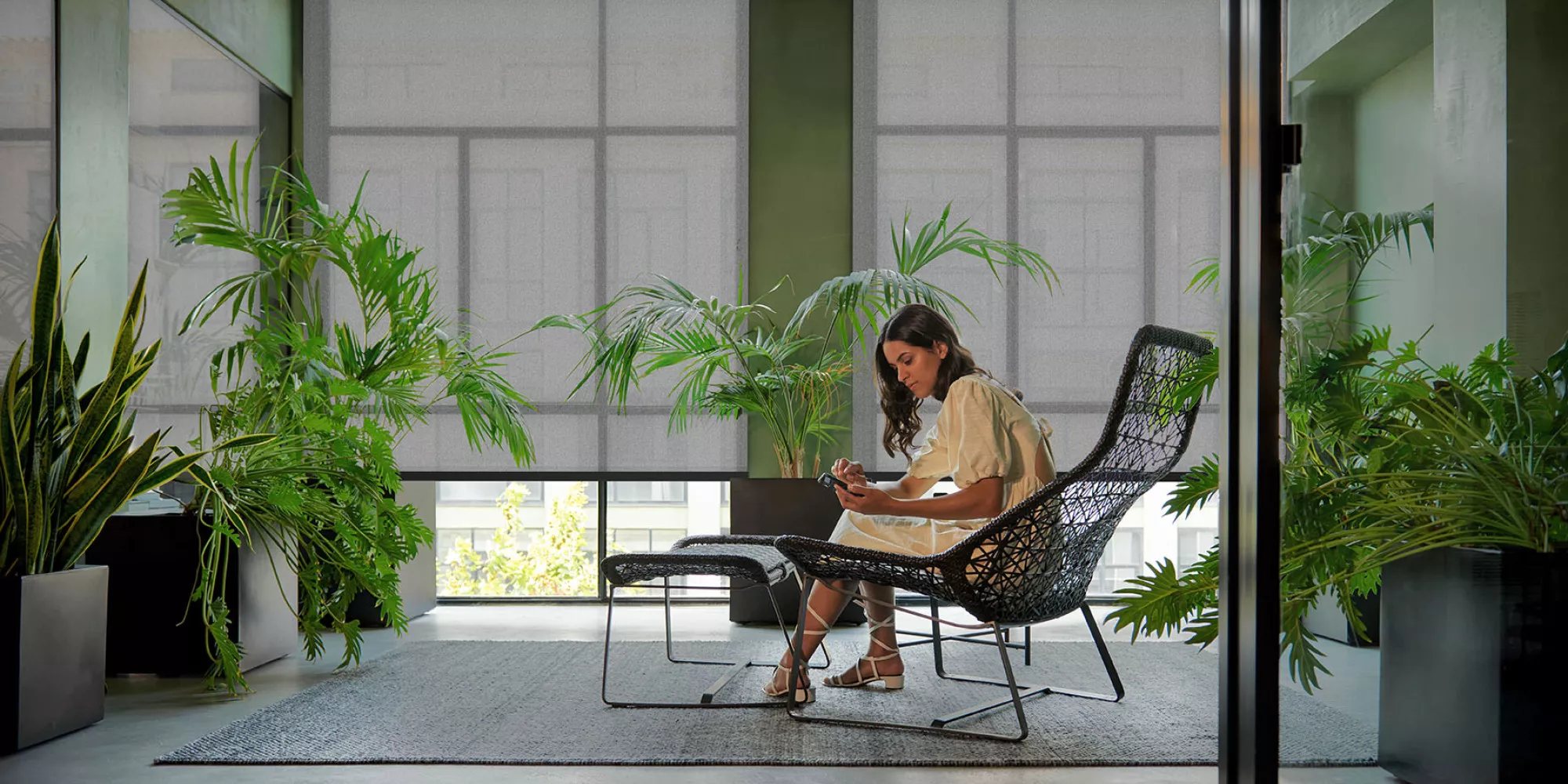
Privacy does not always require blackout fabric. If you want to use the room in daylight, look for a material that lets light through while sufficiently limiting the view inside. The effect depends on the weave, density and other properties of the specific fabric, so do not base your decision on colour or a photograph alone.
A light-coloured material can look airy, but a pale colour does not necessarily mean it will meet your needs. Likewise, a darker fabric does not automatically provide better privacy. When browsing the fabric collection, compare samples in conditions similar to those at home and make it clear that you also need privacy with the indoor lights on.
A denser or blackout fabric may make sense in a bedroom, while a material that retains diffused light may suit a living room. If you want a consistent look across several rooms, the fabrics do not all need to have the same properties.
Allow for window opening and blind edges when measuring
A good fabric choice will not be enough if the blind obstructs the handle or leaves an unwanted view around the edge. Before ordering, check the fitting method, the depth of the window recess and the space around the opening sash. It also matters whether you often tilt the window open and whether plants or furniture stand in front of it.
For a blind fitted to an individual sash, check how it will move with the window. If fitting above the recess, allow for coverage at the sides and access to the handle. The required overlaps and clearances depend on the system, so confirm the final measurements with your installer rather than ordering based solely on the glass dimensions.
Frequently asked questions about privacy blinds for ground-floor windows
Can I keep daylight while blocking the view from the pavement?
Yes. It often helps to cover only the section of the window through which passers-by can see into the room. A pleated blind with an adjustable fabric position may be suitable. Check the final position from outside and adjust it to suit the level of the pavement.
Does a sheer blind provide privacy in the evening?
You should not rely on it. With the lights on, silhouettes or the interior may be visible through sheer fabric. If evening privacy is essential, check the opacity of your chosen material and the coverage around the edges of the window.
Should all ground-floor blinds be the same?
Not necessarily. A street-facing window needs different coverage from one overlooking a private garden. You can coordinate the look through colour and texture while tailoring the operation and light transmission of the fabric to each room.
Looking for privacy blinds for ground-floor windows that suit your windows and daily routine? Send an enquiry to Interlux with approximate measurements and photos of your windows. Describe where people can see in and when you need privacy, so we can help you choose the right made-to-measure blinds.