Choose patio door blinds to suit how your doors open, how often you use them and your lighting needs. Compare pleated, roller, Venetian and panel blinds.
The best patio door blinds are those that do not obstruct the door, handle or access to the balcony. For hinged doors, blinds fitted directly to the door sash are often practical, such as suitably configured pleated or Venetian blinds. For wide sliding doors, panel blinds or separately fitted roller blinds may be suitable. The final choice depends on the space available for fitting, how often you use the doorway and the level of privacy and light blocking you need.
First, consider how you use your patio doors
Patio doors are more than just a large glazed surface. They are a doorway we often use when airing the home, hanging out laundry or spending time on the terrace. A blind that works perfectly well on a standard window may need constant raising or moving aside here. So choose the fitting method and controls before deciding on colours and patterns.
Before looking at samples, open the door to its usual position. Check how much space remains between the door sash and the wall, how far the handle projects and whether there is any furniture, a radiator or a deep windowsill beside the door. Watch how other family members use it too: the solution needs to be convenient for everyone who uses the doorway.
- Do the doors open inwards, slide or also tilt?
- Do you often go through the doorway with your hands full?
- Do you want blinds for the door alone or for the adjacent window too?
- Is there enough space beside the opening to move the blind out of the way?
- Is an insect screen already fitted to the door?
Blinds fitted to the door sash or across the entire opening?
Fitting to the door sash for unobstructed access
A blind fitted to the door sash moves with the door, so you generally do not need to raise it to pass through. This arrangement makes sense for frequently used hinged patio doors. It is important that the chosen system suits the glass dimensions, frame profile and opening mechanism.
For tilt-opening doors, check how the blind is guided or secured. A free-hanging blind can move away from the glass or swing. A suitable guided system can reduce this, but it must be compatible with your particular door. You should also check whether the headrail or brackets will hit the reveal when the door opens.
Wall or ceiling mounting for a coordinated look
A blind covering the entire opening can bring patio doors and an adjacent window together for a cohesive look. This solution is useful when you want to cover a larger area, but it must still allow easy access to the door. You may need to raise a roller blind before passing through, or slide panel blinds to one side.
The width of the opening is not the only factor. Allow for the space the blind takes up when retracted. Stacked panels at the side may cover part of the glass or doorway if there is not enough room for them beyond the door opening.
Which patio door blinds should you consider?
Pleated blinds for flexible light control
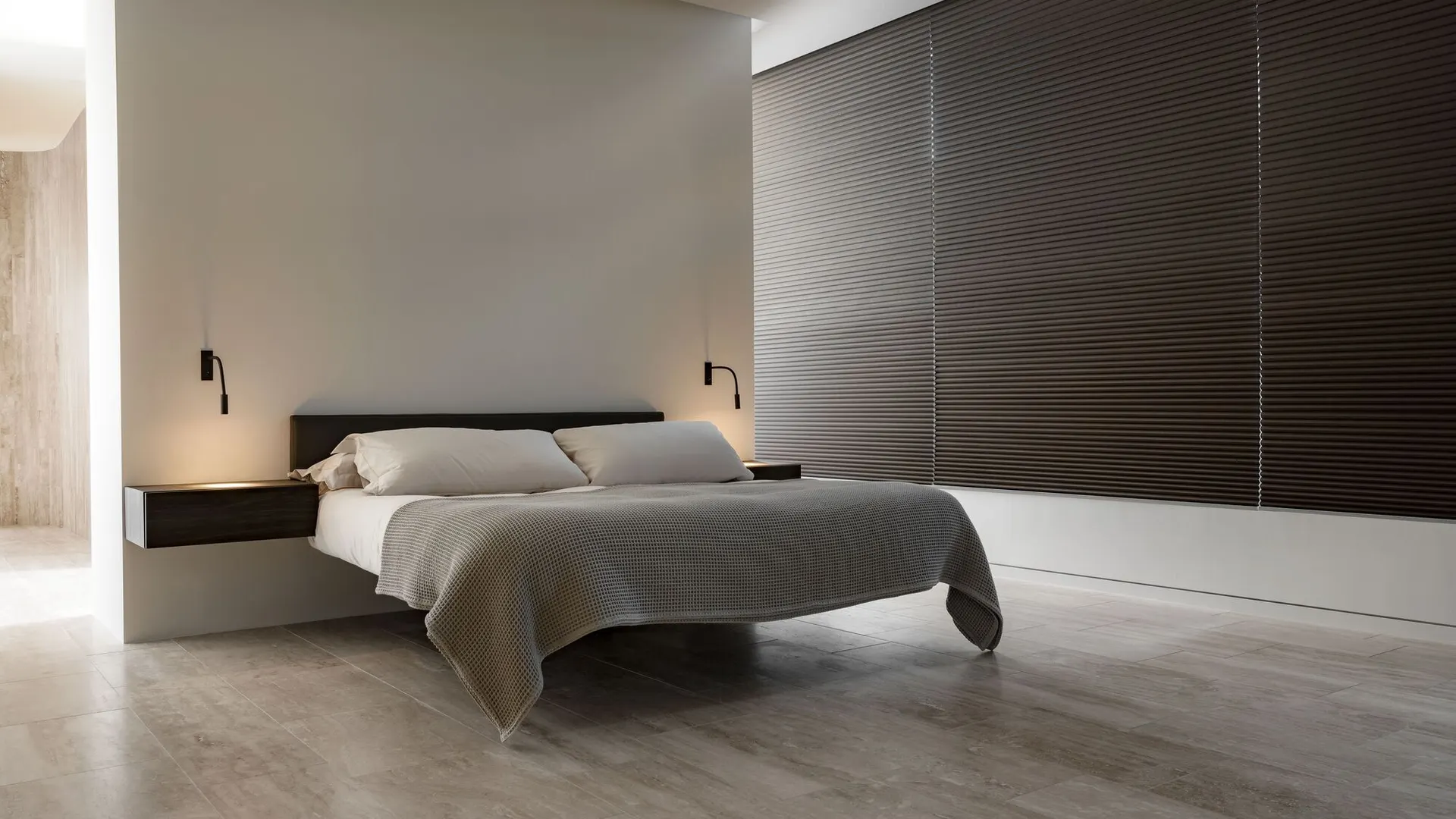
Pleated blinds are an attractive option when you want a blind that sits close to the glass and takes up minimal space. Suitable models let you adjust the fabric from both the top and bottom. This allows you to cover a selected section of glass while leaving the rest clear to let in light.
For patio doors, pay particular attention to the system's size limits, access to the controls and clearance around the handle. The pleated blind should move without rubbing against the door hardware. If there is an adjacent window or a second door sash, you can choose matching fabrics while operating each blind separately.
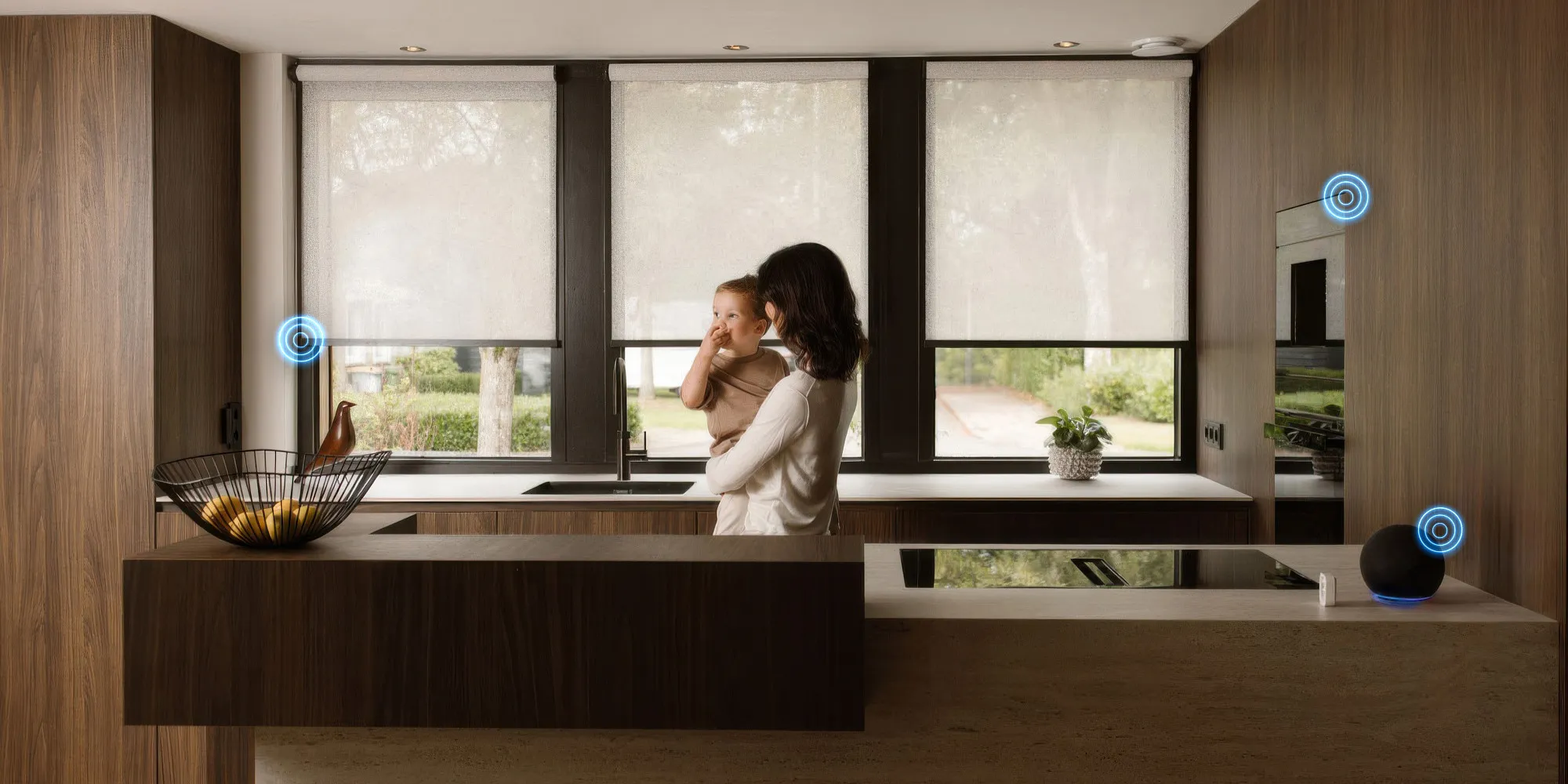
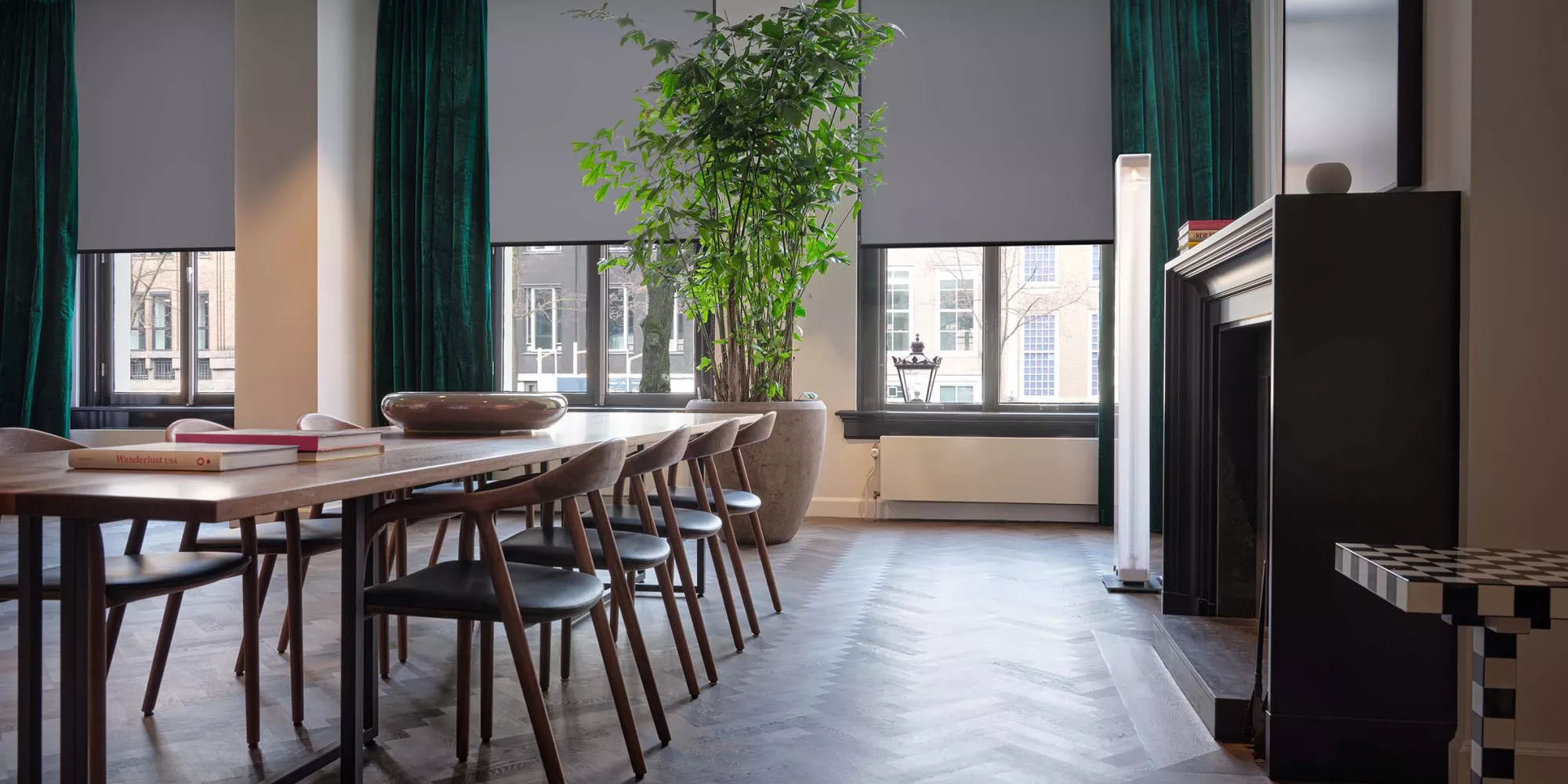
Roller blinds for a simple, understated look
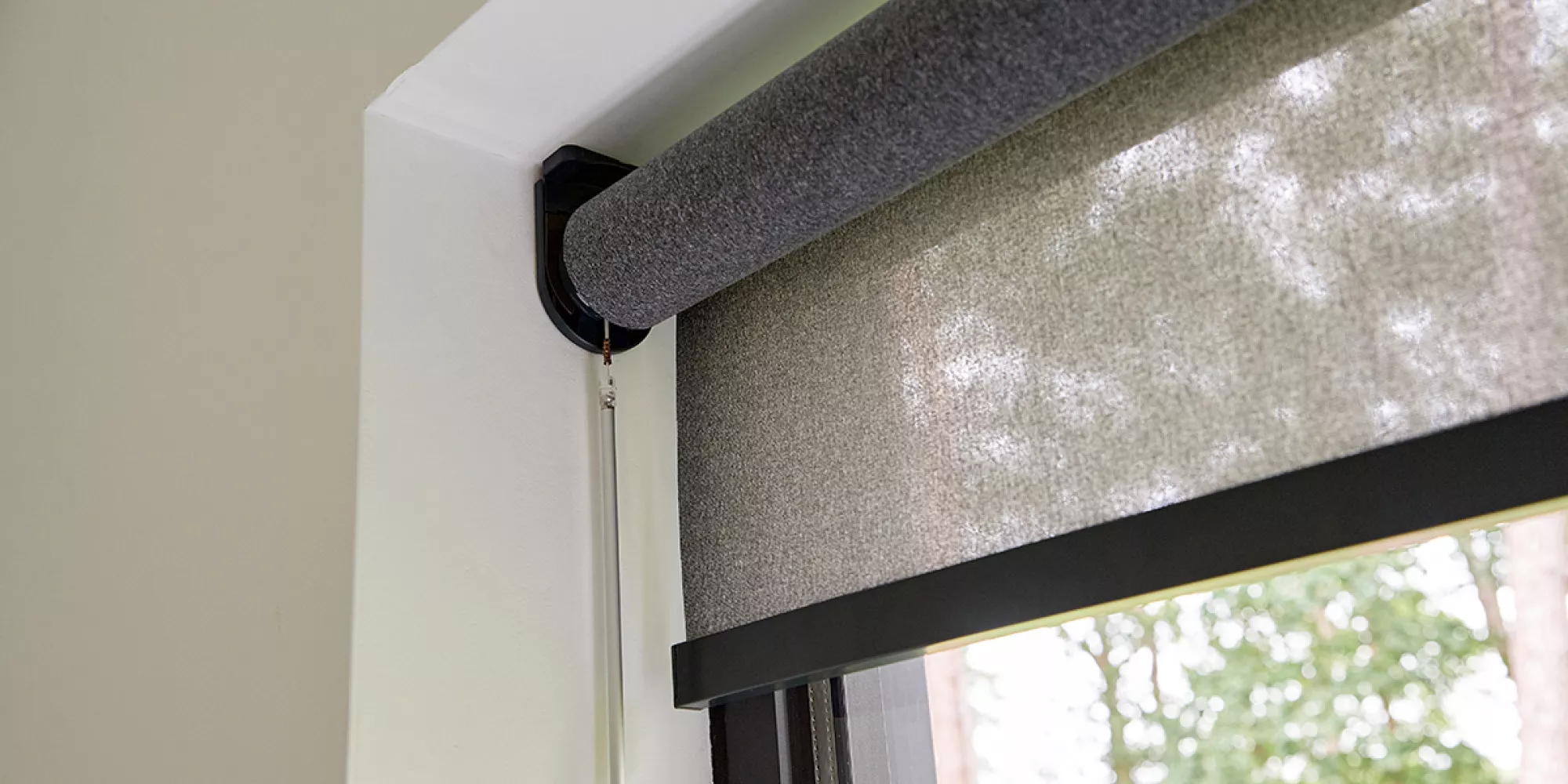
Roller blinds offer a choice of fabrics with different levels of light transmission. For patio doors, the key question is whether the roller blind will be fitted to the door sash or across the opening. For sash-mounted models, check the space available for the mechanism and any guide system. For wall or ceiling mounting, check how much space the raised blind takes up above the door.
If you use the door and window differently, separate controls may be more practical than a single wide roller blind. You can raise the blind in front of the door to pass through while keeping the adjacent window covered. Use the same fabric and carefully align the blinds to maintain a coordinated look.
Venetian blinds for directing light
With Venetian blinds, you control the light by tilting the slats. This is useful if you do not want to raise the entire blind every time the light changes. When fitting them to patio doors, check whether suitable guides are available to prevent the blind from swinging freely as you use the door.
Think about cleaning too. Slats require different care from fabric, so choose a solution you can maintain regularly. If you use the doorway frequently, the controls should be positioned so they do not catch on you as you pass.
Panel blinds for wide sliding door openings
Panel blinds can suit wide glazed areas with sliding doors. Their fabric panels slide sideways, so decide which side they will stack on during planning. This should suit your everyday route to the balcony or terrace, rather than simply the symmetry of the room.
Before choosing, check how much of the opening remains clear when the panels are stacked together. If there is not enough wall space beside the glazing, part of the glass will remain covered even when the blinds are open. For a narrow doorway, this can matter more than the appearance of the blind itself.
Choosing fabric: light, privacy and blackout
View fabric samples against the glass, not just on a table. Sheer fabric softens the light, but does not guarantee privacy in the evening when the interior is lit. If your balcony faces neighbouring homes, check how well the chosen fabric screens the view from outside.
If you want to darken the room, distinguish between the fabric's light-blocking properties and the performance of the complete blind. Light can enter around the edges, above the blind or below it. Blackout fabric therefore does not necessarily mean a completely dark room. For a bedroom with patio doors, the system, overlap and fitting method need particularly careful consideration.
What should you check before ordering made-to-measure blinds?
For an initial consultation, prepare photos of the doors both closed and open, along with approximate measurements. Also photograph the handle, the top edge of the door sash and any insect screen. Final measurements depend on the chosen blind and fitting method, so the glass width alone is not enough to order accurately.
- Check the clearance between the blind, handle and other door hardware.
- Allow space for brackets, guides and the retracted blind.
- Check that the blind and insect screen can be used together.
- For no-drill fitting, check that the brackets are compatible with the frame profile and do not prevent the door from closing properly.
- Choose safe controls, especially if there are young children at home.
Frequently asked questions
Do I need to raise the blind before opening patio doors?
Not always. A correctly fitted blind on the door sash moves with the door. A blind covering the entire opening usually needs to be raised or moved aside to clear the doorway.
Can I fit the same blind to the door and the adjacent window?
You can often choose the same type of blind and matching fabric, but you need to check that the system is suitable for both. Separate controls usually give you more flexibility when using the door and window.
Which blind should I choose for a tilt-opening door?
Look for a model designed for fitting to the door sash, with suitable guides or fixings. Suitability depends on the frame profile, door hardware and space around the glass, so confirm compatibility before ordering.
Looking for patio door blinds that complement your home and are convenient for everyday use? Send an enquiry to Interlux with photos of your doors, approximate measurements and a description of what you need. Together, we will explore the options and choose a suitable made-to-measure solution.