Choosing between pleated blinds and roller blinds? Compare light control, fitting options, cleaning and everyday use to find the right blinds for your home.
Choose between pleated blinds and roller blinds based on which part of the window you want to cover and how you use it. Pleated blinds are a good choice if you want a blind close to the glass and flexible coverage of individual sections of the window, provided the chosen system allows this. Roller blinds are suitable if you prefer a flat fabric surface and simple top-down coverage. With both types, the fabric, measurements and fitting method all affect the final result, so your decision should not be based on appearance alone.
What is the difference between pleated blinds and roller blinds?
Pleated blinds have folded fabric that stacks neatly into pleats when raised. They are often fitted to individual window sashes, although the position and configuration depend on the window and the chosen system. Some models have movable top and bottom rails, allowing you to cover the middle or lower part of the glass while keeping the view clear at the top.
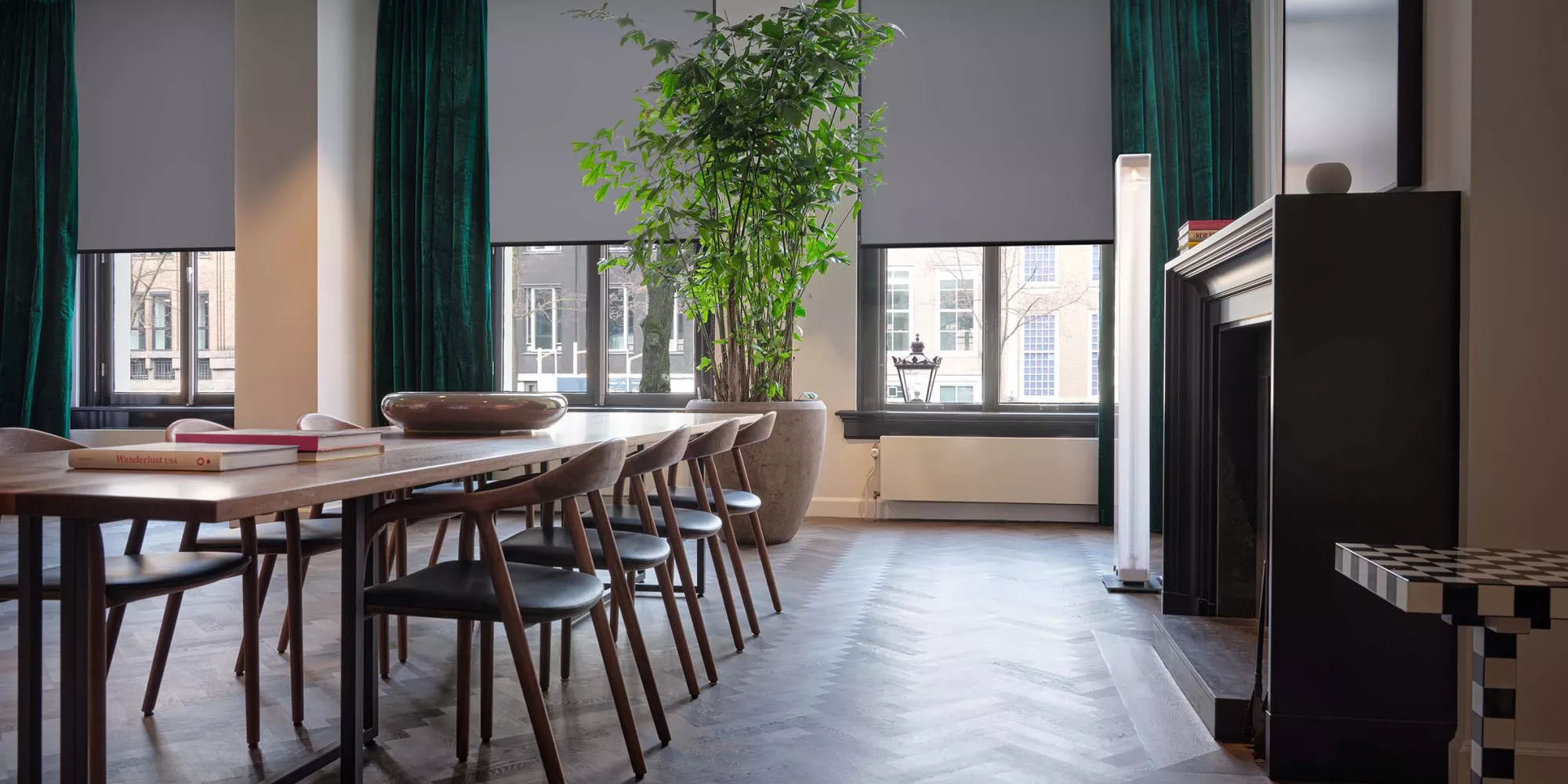
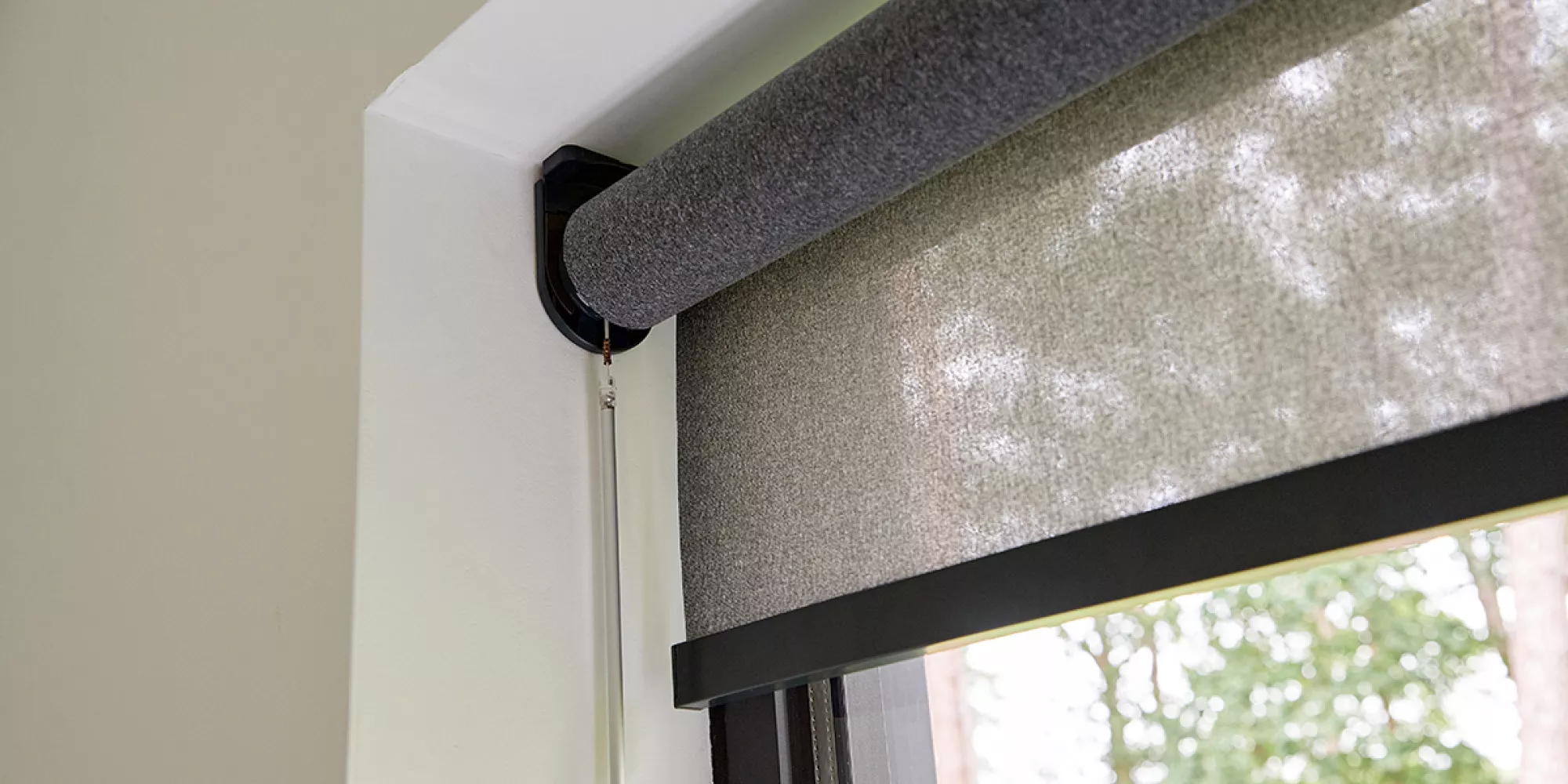
With roller blinds, the fabric rolls around a tube above the area being covered. When lowered, the blind forms a flat surface that can blend into the room or become a more prominent design feature. Depending on the system, roller blinds can be fitted to the window sash, inside the recess, or on the wall or ceiling. The available space and any obstructions around the window determine which solution is practical.
When comparing the two, distinguish between the blind's construction and its performance. Pleats or a flat surface determine its appearance and how it folds or rolls up, while light transmission depends primarily on the chosen fabric.
Light control: what do you want to achieve?
When you only want to cover part of the glass
If you want to screen the view towards a neighbouring building without covering the top of the window, consider pleated blinds with movable top and bottom rails. This lets you position the fabric to block the relevant sightline. Not all pleated blinds offer this option, so make sure you specify it as a requirement when ordering.
With a standard roller blind, the fabric lowers from the top. This is useful when unwanted light mainly enters through the upper part of the window, or when you want to cover the whole area in one movement. To explore the options, view our pleated blinds and compare operating methods, not just fabric samples.
When you want softer light or a darker room
Both pleated blinds and roller blinds are available in fabrics with different levels of light transmission. More translucent fabrics gently filter the light, while denser fabrics block more of it. Colour alone does not tell the whole story: a light-coloured fabric is not necessarily translucent, and a dark fabric is not necessarily blackout.
For a bedroom, check for light gaps around the edges too. Even if the fabric blocks light completely, light can still enter at the sides or along the top and bottom edges. If room darkening is particularly important to you, ask an adviser to assess the complete installation, including how far the blind overlaps the opening and whether guide rails are needed.
Your window and fitting options may determine your choice
Before choosing, open the window fully and tilt it open. Check how much space remains around the handle, above the sash and beside the recess walls. A blind that looks excellent on a closed window may hit the window reveal or obstruct access to the handle when you open it.
- For sash-mounted blinds, check the space available for rails, brackets and controls.
- When fitting above the opening, allow for the space needed by the raised or rolled-up blind.
- For a deep window recess, check access to the window and any items on the sill.
- If you have an insect screen, check that both systems can be used without interfering with each other.
- If you want a no-drill fitting, first check that the brackets are compatible with your window.
A pleated blind fitted close to the glass can be practical for windows you open frequently, as it moves with the sash when correctly installed. Roller blinds can also be sash-mounted, so they are not limited to wall mounting. For larger glazed areas, check the available sizes and how the blinds can be divided into sections for either option.
Pleated blinds vs roller blinds: choosing by room
Living room: everyday use and appearance
In the living room, consider whether you want to make a feature of the window or create a more understated look. Pleated blinds add texture through their folds, while roller blinds create a more uniform surface. If you already have statement curtains, a simple blind can provide a subtle complement. When looking at patterns, check how they work alongside your sofa, rug and other large surfaces.
Bedroom: assess overall light blocking
For a bedroom, start with how sensitive you are to light. As well as the fabric, consider the position of the bed and the direction of the morning sun. Roller blinds can be a suitable solution for covering an entire opening, while pleated blinds can suit individual sashes. Neither type guarantees complete darkness on its own; the material, edges and overall installation are what matter.
Kitchen: accessibility and easy maintenance
In the kitchen, the distance between the window and the sink or hob matters. The fabric should be suitable for the intended environment, and the blind should be accessible for cleaning. Near flames or heat sources, observe the required safety clearances and equipment instructions. Here, choosing between pleated blinds and roller blinds is less important than selecting a suitable material and a safe position.
Which blinds are easier to clean?
The flat surface of a roller blind is easy to inspect, while dust can also collect between the folds of a pleated blind. However, this does not mean you can wipe a roller blind with a wet cloth or wash a pleated blind. The cleaning method depends on the fabric composition, coatings and manufacturer's instructions.
Before ordering, ask how to remove dust and whether spot cleaning is allowed. When browsing the fabric collection, check the care requirements as well as the colour. If the instructions are unclear, consult the supplier before using water or a cleaning product. Do not scrub the fabric or force the mechanism apart.
How do you decide before ordering?
For each window, note the main issue: unwanted light, the need to cover a particular section of glass, or a preference for a uniform appearance. Then check how the window opens, the available fitting space and access to the controls. If possible, view a fabric sample beside your window during the day and with the indoor lights switched on.
You do not have to choose the same type of blind throughout your home. You can create a coordinated look with similar colours while tailoring the function to each window. When making an enquiry, include photos of the window both open and closed, along with approximate measurements. Final manufacturing measurements should be checked against the chosen fitting system.
Frequently asked questions
Are pleated blinds suitable for every window?
Not necessarily. Suitability depends on the window's shape, dimensions and frame profile, as well as the chosen system. For angled or other unusual windows, check whether a specialist design is available and whether there are any operating limitations.
Do roller blinds provide more privacy than pleated blinds?
Not automatically. Privacy depends mainly on the fabric, how much of the glass is covered, and the difference between indoor and outdoor light levels. Check how see-through the fabric is in the evening too, when the interior is lit.
Can I combine pleated blinds or roller blinds with curtains?
Yes, provided there is enough space for both systems. Check that the curtains do not obstruct the blind's controls or prevent the window from opening. A colour-coordinated combination lets you choose practical light control and decorative styling separately.
Still unsure whether pleated blinds or roller blinds are better for your windows? Send an enquiry to Interlux with photos, approximate measurements and a description of your preferences. Together, we will explore the options and find a made-to-measure blind suited to your space and everyday use.